

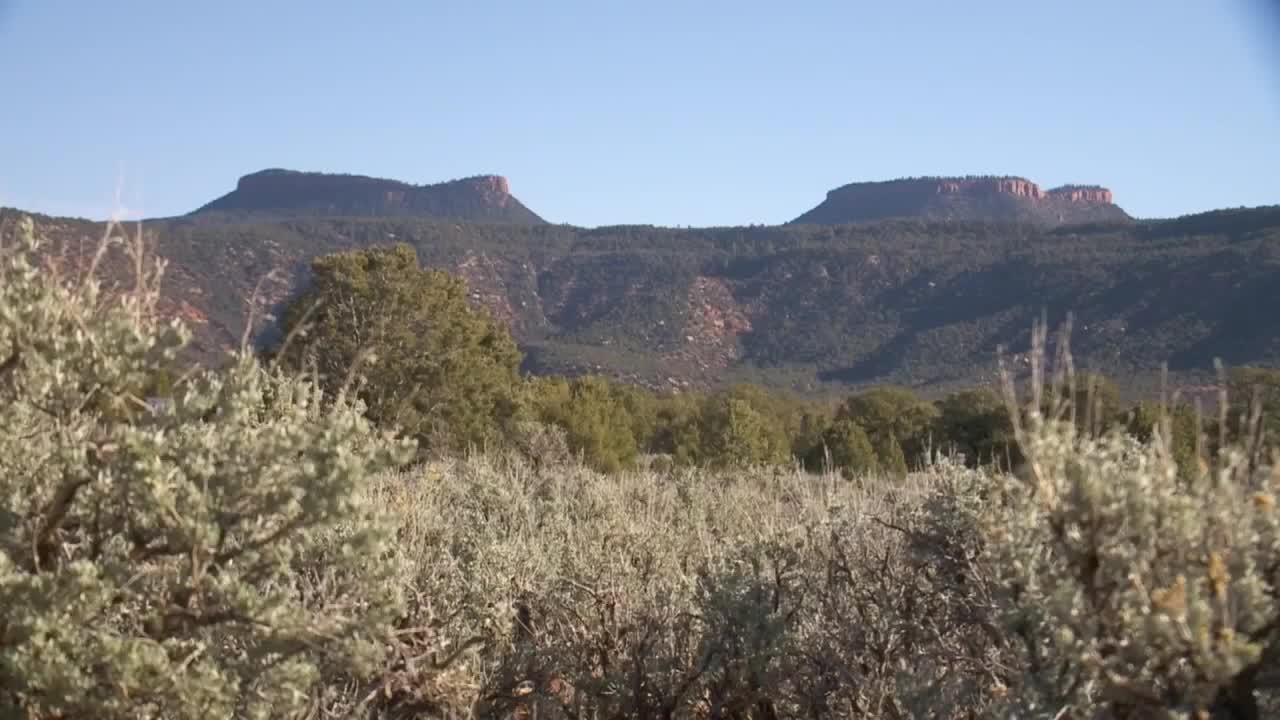


SALT LAKE CITY — A coalition of environmental conservation groups has restarted litigation challenging President Trump's recent executive order to shrink Bears Ears and Grand Staircase-Escalante national monuments.
The new litigation challenges the Trump administration's decision to slash roughly three million acres of land from both southern Utah monuments. It is a reactivation of a lawsuit filed in 2017, when Trump previously shrank the monuments.
"Holding him accountable for what we feel is an unlawful reduction, I mean, really decimation of nearly three million acres cut from both national monuments," Scott Braden, the executive director of the Southern Utah Wilderness Alliance, said in an interview with FOX 13 News on Wednesday as the lawsuit was being filed.
SUWA is among the plaintiffs represented by the environmental law firm Earthjustice who went back to Washington D.C.'s Circuit Court to challenge Trump's powers under the Antiquities Act. Others include The Wilderness Society, the Sierra Club, Natural Resources Defense Council and Great Old Broads for Wilderness.
The plaintiffs argue that a president has the power to create or expand a monument, but it doesn't work the other way around.
"It doesn’t work in reverse. That’s why we’re filing suit today. We believe it was unlawful and we’re going to hold the president to account," Braden said.
In response, the White House told FOX 13 News parent company Scripps News Group's Washington Bureau: "The Obama and Biden administrations abused the Antiquities Act to lock up millions of acres of Utah's public lands, impoverishing local communities and sharply restricting access for recreation, grazing, resource development, and fire prevention. President Trump rightsized the Bears Ears National Monument to allow for common sense land use in these areas.”
The monuments have been a political football for years. Grand Staircase-Escalante National Monument was created in 1996 by President Clinton. In 2016, President Obama created the Bears Ears National Monument. President Trump shrank both monuments in 2017. President Biden reinstated both monuments' boundaries in 2021 and even expanded Bears Ears a little. Earlier this year, President Trump dramatically reduced both monuments' boundaries again.
Republican political leaders in Utah who have supported reducing the monument boundaries have argued they are simply too big and while they support some protections, a monument designation goes too far.
"You can protect Utah’s irreplaceable cultural treasures while also allowing the surrounding landscape to be responsibly managed for wildlife, recreation, and future generations. Those ideas aren’t in conflict. They’re exactly what good conservation looks like," House Speaker Mike Schultz, R-Hooper, said in a statement reacting to the lawsuit. "Unfortunately, some environmental groups seem more focused on keeping people out than actually managing and protecting the land. That’s not in the best interest of Utah’s environment, lands, or people."
Senate President J. Stuart Adams, R-Layton, said he supported Trump.
"We support President Trump’s efforts to have monument designations be consistent with the Antiquities Act’s intent for appropriate size and scope, allowing for more focused protection, better management and improved public access. This balanced approach will help preserve Utah’s cultural and natural treasures while supporting responsible stewardship for generations," he said in a statement.
Hundreds protested outside the Governor's Mansion in Salt Lake City against Trump's decision in July. Conservation organizations and Native American tribes have argued there are sensitive archaeological, paleontological and environmental resources that are now vulnerable to mining, fossil fuel and other development as a result of the Trump administration's actions.
In 2017, tribal groups collectively sued the Trump administration. It is unclear if they will also seek to restart their litigation. With his recent executive order, Trump eliminated a tribal coalition that helped manage the monuments.
"This latest court filing by conservation groups and advocates is an important step in the ongoing defense of these lands against efforts by this administration to irrevocably alter this sacred landscape," Native American Rights Fund Deputy Director Matthew Campbell said in a statement to FOX 13 News. "We look forward to continued partnership defending these monuments as it is Tribal Nations’ sovereign right to steward Tribal homelands."