


SPANISH FORK, Utah — As extreme heat and drought conditions impacts nearly all of Utah, a seventh-generation family farm in Spanish Fork is relying on long-practiced conservation methods and a new, colorful crop to weather the challenge.
“This is a whole new ball game. This is the driest I can remember,” said Rex Larsen, owner and operator of Larsen Family Farms.
Larsen explained that the challenge of farming is that no two years are alike, but this year is particularly difficult.
“The least amount of snowpack that we’ve had. Our Spanish Fork River is about 50% normal,” he said.
For Larsen, farming is a legacy he feels compelled to continue. His family has been working on the land for seven generations.
“Barely, wheat, alfalfa, corn, pumpkins, and now tulips,” said Larsen. To protect that legacy, the family has spent years creating water conservation techniques.
“Nearly every one of our ditches is lined with concrete, so the water will stay in the ditches and go out into the field,” Larsen explained. “Most of our land is laser-leveled, so it’ll irrigate more efficiently.”
No bull, Utah farmers have other concerns on top of gas, oil prices:
The farm also captures and recycles any runoff water.
While Larsen plans for some of his fields to remain idle, his daughter, Kara Lewis, had an idea to ensure the farm can still profit.
“We’ve planted 250,000 tulips here on our farm,” Lewis said.
She planted the seeds back in December, selecting a crop that is better suited to the current conditions.
“They are very drought resistant. They don’t like a lot of water in the spring,” Lewis said.
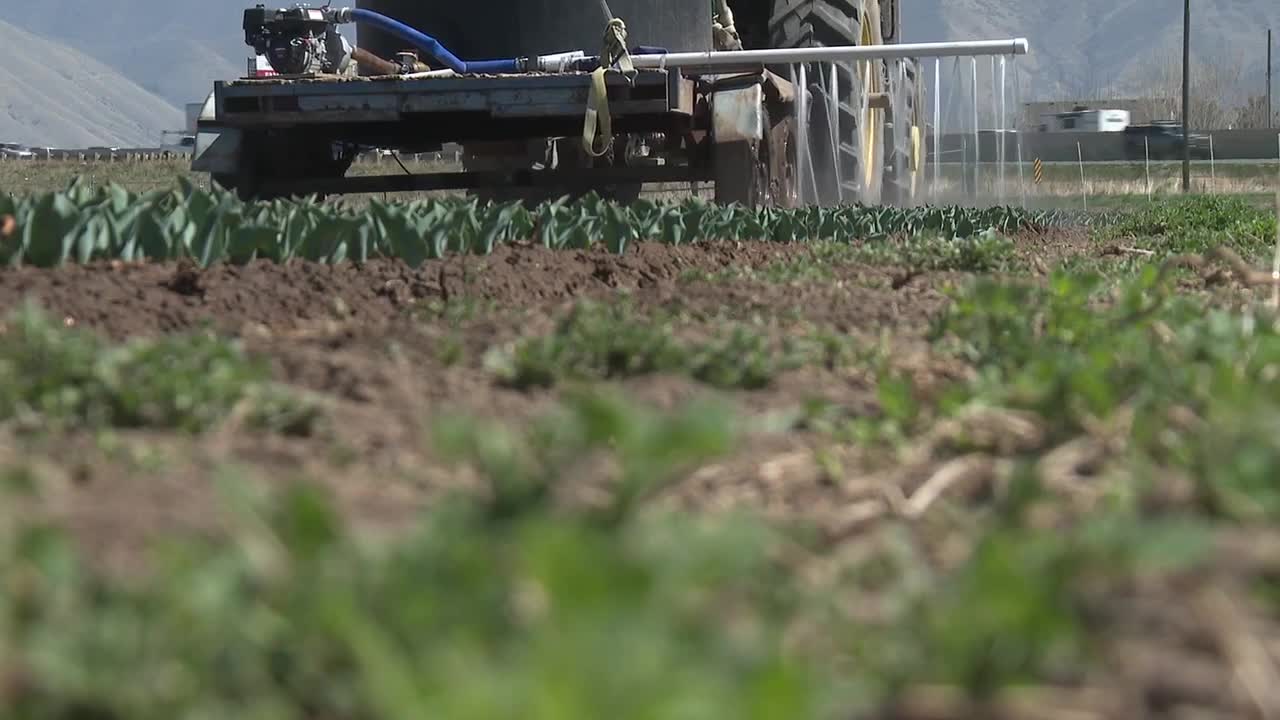
Using a specialized system that gets water directly to the crop rows, the family is continuing their conservative approach to watering. Larsen hopes the tulips will be ready for the public to see within a week or two, providing a way to supplement the farm’s income when other fields can't grow anything.
Larsen said water conservation is something most farmers strive for, adapting to whatever conditions they face.
“Those years that it’s dry, you learn to conserve," he said. "Those years that it’s wet, you learn to pivot and take what you can.”
