


WEST JORDAN, Utah — The American space program needed big rubber rings.
The subcontractor that won the job was called HydraPak – a Salt Lake City company that made seals for industrial equipment.
“We were the only one that could do it,” said Wallace Jeffs, who in 1986 worked in sales at HydraPak.
HydraPak made what were called O-Rings for every space shuttle, including Challenger. Forty years after the Challenger disaster that killed seven people – a catastrophe the O-Rings had much to do with – two of the men who worked there spoke to FOX 13 News for the first time.
“We were just proud to be part of this program, and be part of the success,” Jeffs said.
“We were providing O-Rings for their specifications,” said Jeff Wall, who also was in sales at HydraPak.
Challenger and HydraPak can be a sensitive topic for Jeffs and Wall – not just because of the lives lost but because of who their families are and where they worshiped.
HydraPak started in 1976. One of the founders on the incorporation paperwork was Rulon T. Jeffs. He was the president and prophet of a polygamous sect that would later call itself the Fundamentalist Church of Jesus Christ of Latter-Day Saints.
BUSINESS AND FAITH
Wall’s father, Lloyd Wall, was another of the HydraPak founders. His family worshiped with Rulon Jeffs’ church.
HydraPak employed Jeffs, a certified public accountant, to do its accounting.
“I do know that there was no participation on his part in the business itself,” Jeff Wall added.
Wallace Jeffs is one of Rulon Jeffs’ 65 or so children. He described his father’s name on the incorporation paperwork for HydraPak as a custom for those in the faith.
It was a way to show “loyalty to him as a religious leader,” Wallace Jeffs said.
Before starting HydraPak, Lloyd Wall worked at an earlier incarnation of rocket maker Morton Thiokol. When Morton Thiokol won the contract to make the space shuttle boosters, it turned to its old employee to make the O-Rings.
They were sort of gaskets to sit in joints connecting the stacked rocket boosters. The O-Rings kept gases from escaping and “were designed to perform under pressure,” Jeff Wall said.
The O-Rings were actually made from multiple rubber cords purchased from another subcontractor. Workers at HydraPak then sewed the rubber together and sanded them.
“They had to have very good, dexterous hands to sand the O-Ring,” Wallace Jeffs said. “So, it was done mostly with ladies because they're really good at it.”
Jeff Wall said his father cured the O-Ring prototypes at home in the family oven. Once the process was approved, HydraPak purchased an industrial oven.
COLD CONDITIONS
The night before the Challenger launch, engineers at Morton Thiokol – seeing temperatures at Cape Canaveral were going to be below or near freezing – cautioned against a launch. They worried about the O-Rings.
“Under cold conditions, this material – called fluorocarbon – was not particularly resilient,” said Jeff Wall.
But, an investigation would later find, Morton Thiokol managers recommended Challenger lift off as scheduled.
“HydraPak was not involved in the decision-making process for whether to launch or not,” Jeff Wall said.
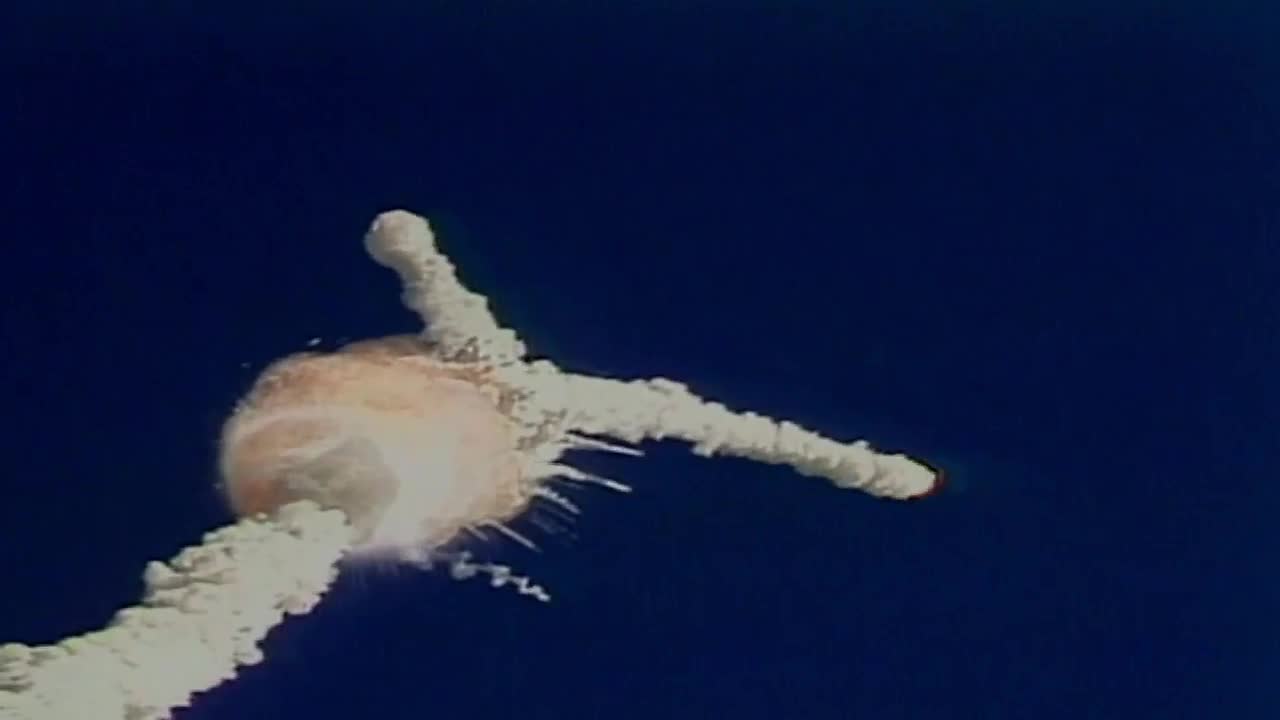
Challenger lifted off the morning of Jan. 28, 1986. Wallace Jeffs remembers being in a hardware store, buying materials to expand HydraPak’s building when he saw the disaster on TV.
Jeff Wall was home with the flu.
“I was asleep until my brother called me,” he recalled, “and he says, ‘The space shuttle Challenger blew up.'
“And I couldn't understand that.”
“Not in a million years did I think it was our O-rings,” Wallace Jeffs said.
An independent commission investigated Challenger. Its report stated the disaster “was caused by a failure in the joint between the two lower segments of the right solid rocket motor. The specific failure was the destruction of the seals.”
Jeff Wall contends the O-Rings didn’t fail. After all, he points out, HydraPak built the rings to Morton Thiokol’s specifications.
“The O-Rings were indeed damaged during the launch and breached, but it was a faulty joint design that allowed this to happen,” Jeff Wall said.
The commission report mentions HydraPak only in an appendix. It found no quality problems with the O-Rings, but nevertheless recommended an improved manufacturing process and that HydraPak keep better documentation of that process and inspections.
STRESS AND SALES
The report hasn’t stopped people from referring to the O-Rings as “faulty.”
Wallce Jeffs said he has heard people spread rumors that the Challenger O-Rings were manufactured in a pizza oven. He assumes that myth is a byproduct of Lloyd Wall curing the protypes in his kitchen oven.
“The other myth would be the fact that we were somehow at fault for the Challenger disaster,” Wallace Jeffs said, “which is absolutely false.”
Matters weren’t helped in 1988 – two years after the disaster – when newspapers across the country ran headlines about inspectors at HydraPak finding cut marks on new O-Rings. Sabotage was suspected, but none of the damaged O-Rings ever made it onto a space shuttle and no one was ever charged with a crime.
By then, Lloyd Wall and his partners had sold HydraPak to Wallace Jeffs and his brothers.
“A lot of the stress of the shuttle disaster put stress on the business,” Wallace Jeffs explained. “They didn't know whether that was going to even succeed. They thought they were going to lose the contract for Morton Thiokol.”
But HydraPak kept the contract. HydraPak and Morton Thiokol worked with NASA to improve the joints. HydraPak’s rings flew on every space shuttle.
Jeff Wall stayed at HydraPak and became program manager for the space shuttle O-Ring program.
Over the years, various FLDS businesses have been found or accused of underpaying workers and sending money to church leaders. Wallace Jeffs said, in the time he owned HydraPak, he only ever paid a personal tithing to the FLDS.
SHARED HISTORY
Wallace Jeffs and his partners split up and sold HydraPak near the turn of the century. He left the FLDS more than 20 years ago. He now lives in Montana.
Jeff Wall does not worship with the FLDS either. He now lives in Missouri. He is recovering from a stroke. For that reason, FOX 13 News agreed to send him questions in advance.
What was Morton Thiokol is now part of defense industry giant Northrop Grumman.
HydraPak is now located in West Jordan. It still makes seals for everything from pressure cookers to fighter jets. The company is celebrating its 50th anniversary this year.
“We’re going to make a big shebang about it,” said Jake Jeffs, HydraPak’s general managers.
Yes, he’s another son of Rulon T. Jeffs. Jake Jeffs said working at a company founded by his father is a point of pride for him, even if no one in HydraPak management worships with the FLDS.
“I would say that there is a shared history, background, experience,” Jake Jeffs said.
He says the story of the Challenger O-Rings is also part of that history.